




The 1930s-1940s: Resilience, Sacrifice, and Showing Up
04/30/2026
By: ESB Financial
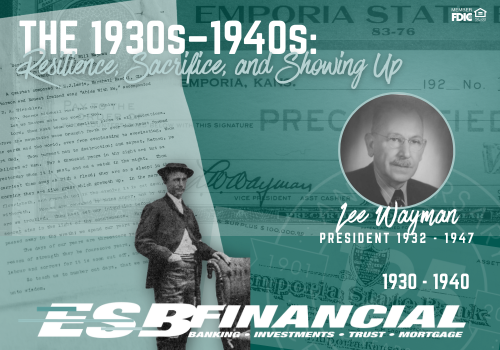
If the 1920s were about growth, the 1930s and 1940s were about something deeper. Endurance.
By 1930, Emporia had grown to just over 14,000 people. But as the Great Depression took hold, that number dipped slightly by 1940, reflecting the strain felt across communities everywhere.
This was a time when life slowed down, not by choice, but by necessity.
When Every Dollar Counted
The 1930s brought real challenges. Jobs were harder to find. Farming became more difficult. Dust storms swept across Kansas, and uncertainty became part of everyday life.
And when we say every dollar mattered, we mean it.
By the late 1930s, the minimum wage was just 25 cents an hour.
That meant families had to be incredibly intentional with how they spent, saved, and planned. It was not about extras. It was about making sure what you had would last.
You saw that mindset show up across the community. Schools promoted “Thrift Week,” encouraging families and students to budget, save what they could, and build strong financial habits, even in the hardest of times.
It was not flashy. It was not easy. But it was steady.
A Time of Transition
This decade also marked an important moment in ESB’s history.
In 1932, founder Will Wayman passed away after decades of leadership and commitment to the community. His impact shaped not just the bank, but the way it served the people around it.
Leadership then transitioned to his son, Lee Wayman, continuing the family’s role in guiding the bank forward.
Even during one of the most uncertain economic periods in history, that continuity mattered. It meant stability, consistency, and a continued focus on relationships.
A Community That Didn’t Quit
What stands out most about this time is not just the hardship. It is how people responded to it.
Neighbors helped neighbors. Families leaned on each other. And even when things were uncertain, there was a shared understanding that you just kept going.
That same mindset carried into the 1940s as the world shifted again, this time because of World War II.
The 1940s: A Different Kind of Sacrifice
The war touched nearly every part of life.
Men from Emporia left to serve. Businesses adjusted. Schools and communities stepped up in whatever ways they could.
Here at home, that meant collecting materials for the war effort, supporting local fundraising efforts, and finding ways to contribute, even if it felt small.
Because during that time, nothing felt small.
Supporting the Bigger Picture
During the war years, people were encouraged to support the country financially as well.
Government bonds became one of the ways families could contribute, helping fund the war while also investing in their own future.
Locally, that same spirit showed up through saving, planning ahead, and making thoughtful financial decisions, even when things felt uncertain.
And through it all, there was a common thread. Showing up for something bigger than yourself.
What We Can Take From It
The 1930s and 1940s were not easy decades.
But they remind us of something important. Progress does not always come from big leaps. Sometimes, it comes from small, steady decisions made over time.
Saving what you can. Planning ahead. Taking care of what matters.
Those habits carried people through some of the hardest years in history.
And in a lot of ways, they still do.