




The 1920s-1930s: Growth, Grit, and Staying Grounded
03/26/2026
By: ESB Financial
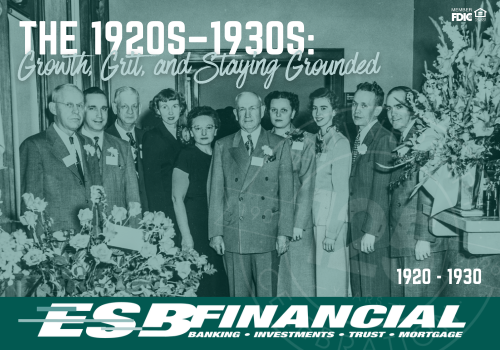
The 1920s and 1930s were a defining time for both Emporia and ESB.
They were years of progress, change, and eventually, challenge. But through it all, one thing remained steady: the importance of community and strong financial foundations.
A Growing Community
By 1920, Emporia was on the rise. The population had grown to over 11,000 people, and by 1930 it reached more than 14,000. Businesses were expanding, streets were improving, and everyday life was evolving quickly.
You could see it in the little things.
Cars were becoming more common. Roads were being paved. New buildings were going up. A home in Emporia might cost anywhere from $1,800 to $6,500, and a simple hamburger could be bought for just a nickel.
It was a time of momentum. A time when the future felt wide open.
And right in the middle of it all, ESB was growing alongside the community it served.
A Season of Change
But as quickly as things were growing, the 1930s brought a shift.
The Great Depression hit communities across the country, and Emporia was no exception. Local newspapers told stories of dust storms, difficult farming conditions, and financial uncertainty. Families had to stretch every dollar. Businesses had to adapt. And for many, the future suddenly felt less certain.
It was a season that tested people.
And it revealed what mattered most.
Steady Leadership in Uncertain Times
In 1932, founder Will Wayman passed away after spending the day at the bank he built. Leadership then passed to his son, Lee Wayman, continuing the family’s commitment to the community.
That continuity mattered.
During uncertain times, people look for stability. They look for relationships they can trust. And ESB remained focused on exactly that—serving customers, supporting local families and farmers, and continuing to show up day after day.
Not because it was easy, but because it was the right thing to do.
Lessons That Still Matter Today
If there’s one thing we can take from the 1920s and 1930s, it’s this:
Financial habits matter—especially when times are uncertain.
Even during those years, people were encouraged to:
- Save when they could
- Plan ahead
- Be thoughtful with how they spent and managed money
Those principles haven’t changed.
The world looks different today. Technology has changed. Banking has changed. But the foundation is still the same.
Strong habits. Smart decisions. Trusted relationships.
Built Then. Still True Today.
The story of the 1920s and 1930s isn’t just about growth or hardship. It’s about resilience.
It’s about a community that kept going.
A bank that stayed steady.
And a legacy that continued—generation after generation.
And 125 years later, that same foundation is still what drives ESB forward.